Last winter I moved my laptop from the kitchen table to a spare corner by a north-facing window. Within a month, the pothos I had dropped on the shelf as an afterthought started trailing down the bookcase, and I noticed something odd: I was taking fewer screen breaks to scroll my phone and more to pinch off a yellow leaf or check a bud. A home office with flowers is not a design luxury. It is a small system of light, containers and habits that you can set up in a weekend and maintain in about ten minutes a day.
Here is how to build that system without turning your workspace into a jungle or a second job.
Start with light, not with the plants
Most people choose plants they like and then hunt for a spot. Flip that order. Spend one morning mapping the light in your office, because light decides which flowering plants have a chance.
Read your window honestly
In the Northern Hemisphere, which covers the entire U.S., the rules are fairly consistent:
- South-facing windows: the brightest option, with strong light most of the day. Good for geraniums, kalanchoe, and orchids placed a few feet back from the glass.
- East-facing windows: gentle morning sun. This is the sweet spot for African violets, begonias and moth orchids.
- West-facing windows: hot afternoon light that can scorch petals. Sheer curtains help a lot.
- North-facing windows: dim, steady light. Flowers struggle here without help, though peace lilies and some bromeliads cope.
A quick test: hold your hand a foot above the desk at noon. A sharp, defined shadow means bright light. A soft, blurry one means medium. Barely a shadow means low light, and flowering plants will need supplemental lighting.
Add a grow light that doesn’t look like a lab
Blooming takes far more energy than growing leaves, so a plant that survives in dim light may never flower there. A full-spectrum LED bulb (roughly 5000–6500K) in a regular desk lamp or clip-on fixture works well. Place it 6 to 12 inches above the plant and run it 12 to 14 hours a day. Plug it into an inexpensive outlet timer so you never think about it again. Warm-white “daylight” bulbs also stay easy on your eyes during video calls, which is a nice side benefit.
Choose pots that fit your desk, your habits and your floor
Containers cause more plant deaths than pests do, mostly through overwatering. Three details matter most.
- Drainage holes. Always. If you love a decorative cachepot without holes, keep the plant in a plastic nursery pot inside it and lift it out to water.
- Size. Pick a pot only 1 to 2 inches wider than the root ball. Oversized pots hold wet soil for too long, and roots rot.
- Material. Terracotta breathes and forgives heavy-handed waterers. Glazed ceramic and plastic hold moisture longer, which suits forgetful ones.
Put a saucer or tray under everything. A wooden desk and a leaking pot are a bad mix, and cork-backed trays are cheap insurance.
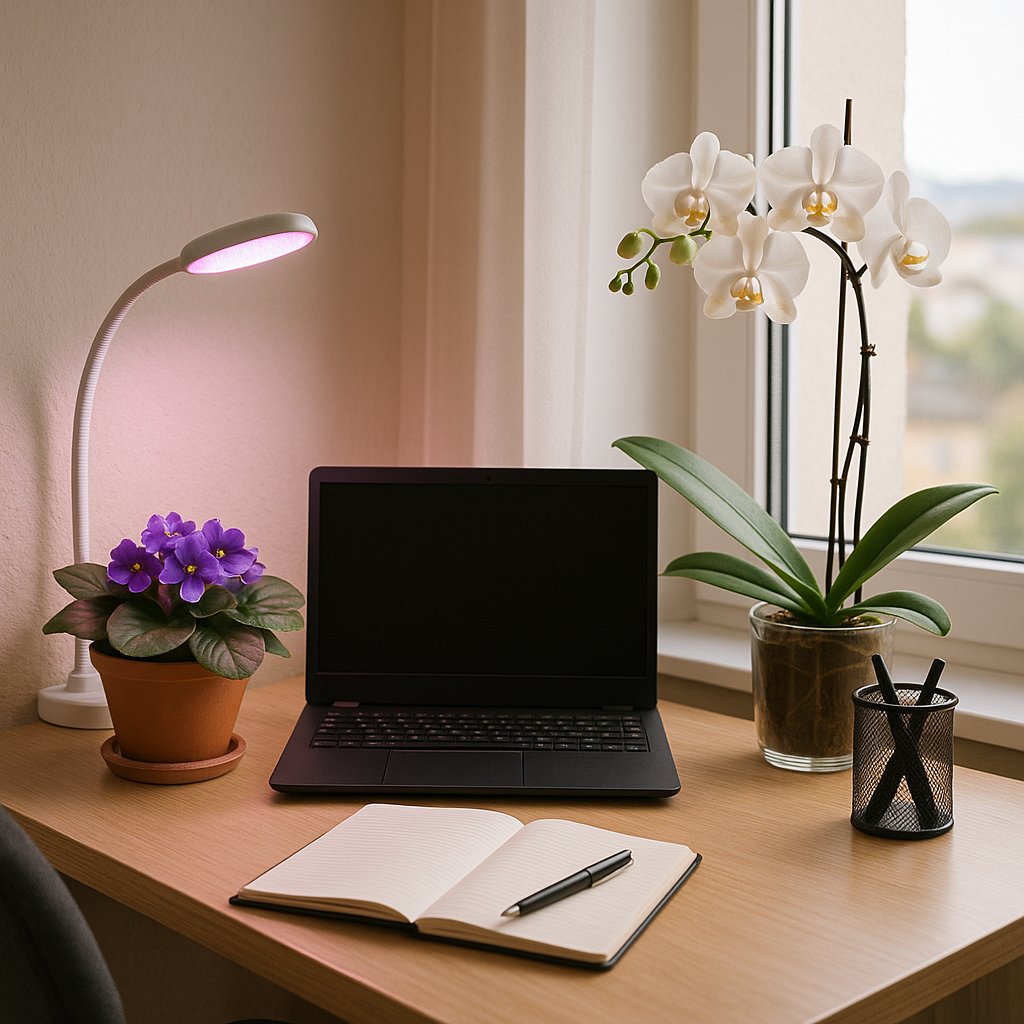
Plants that actually bloom indoors
If you want flowers rather than just foliage, these have a good track record in typical American homes and apartments:
- African violets: compact, bloom nearly year-round under steady light, and fit on a monitor-side shelf.
- Moth orchids (Phalaenopsis): flowers can last two to three months, and they like the same temperatures you do (65–80°F).
- Peace lilies: tolerate lower light and droop dramatically when thirsty, which makes them a handy visual reminder.
- Kalanchoe: tough, succulent, and happy to be forgotten for a week.
- Begonias: reliable color for east-facing spots.
One caution: if you share your home with pets, check each plant against the ASPCA’s toxic plant list before buying. Peace lilies and kalanchoe, for example, are harmful to cats and dogs.
A care routine you will actually keep
Consistency beats intensity. Tie plant tasks to work moments that already exist, and the routine more or less runs itself.
The daily 2-minute check
While your computer wakes up or your coffee brews, glance at each plant. Look for drooping, yellowing or pests such as tiny flies near the soil. Turn pots a quarter turn so growth stays even rather than leaning toward the window.
The weekly 10-minute reset
Pick a fixed slot, say Friday afternoon as a way to close out the week. Then:
- Test the soil with your finger. Water only when the top inch feels dry (orchids: when the bark is dry and roots look silvery).
- Water at the soil line, not over the flowers, and empty saucers after 15 minutes.
- Remove spent blooms and dead leaves. This redirects energy into new buds.
- Wipe dusty leaves with a damp cloth. Dust blocks light more than you would think.
The monthly extras
Feed blooming plants with a diluted balanced or bloom-formula fertilizer, about half the label strength, during spring and summer. Ease off in winter when growth slows. Check drainage holes for roots, and rotate plants between brighter and dimmer spots if one is struggling.
Common mistakes I see (and have made)
- Watering on a calendar instead of by feel. Heating and AC change how fast soil dries, so check first.
- Placing plants against cold glass in winter. Leaves touching a frosty window can get damaged. Pull them back a few inches.
- Parking plants next to vents. Blasts of hot or cold air dry out buds and cause them to drop.
- Ignoring humidity. Winter heating can push indoor humidity below 30%. A small humidifier or a pebble tray helps orchids and violets, and it makes the room nicer to breathe in, too.
Start small, then let the space grow
You don’t need a dozen plants. Begin with one or two that match your actual light, put them in pots with drainage, and attach a short routine to your workday. If they thrive for a couple of months, add another. Over time, you will learn how your particular room behaves through the seasons, and that knowledge is what makes the difference. For next steps, look up the specific light and watering needs of the species you choose, since even close relatives can differ. A desk with a blooming plant on it tends to be a calmer, more pleasant place to spend eight hours.