Last spring I watched a coworking member named Dana bring in a gorgeous fiddle-leaf fig. It looked great for about three weeks. Then the air conditioning kicked in, the window light shifted, and the leaves started dropping like confetti. Meanwhile, a battered pothos on the shelf next to her desk, which nobody had touched in months, was thriving. That contrast says a lot about choosing desk plants. The goal isn’t the most photogenic plant. It’s the one that tolerates your actual conditions and your actual schedule.
Below is a practical guide to plants and flowers that handle typical office and home desk environments in the US: fluorescent lighting, dry air, irregular watering, and the occasional forgotten week.
Start with your light, not your taste
Before you pick anything, spend a day observing your space. Most plant failures at a desk come down to light. A simple test: hold your hand about a foot above the spot where the plant would sit at midday. A sharp, defined shadow means bright light. A soft, blurry shadow means medium light. A barely visible shadow means low light.
- Low light (interior desks, windowless rooms, fluorescent-only offices): ZZ plant, snake plant, cast iron plant.
- Medium light (a few feet from a window): pothos, philodendron, peace lily, Chinese evergreen.
- Bright light (near a south- or west-facing window): jade plant, aloe, haworthia, succulents in general.
One caveat. “Low light” doesn’t mean “no light.” Plants in genuinely dark rooms will survive for a while, but they won’t grow much. If your space has no natural light at all, a small full-spectrum LED desk lamp on a timer (about 8 to 10 hours a day) makes a bigger difference than any plant choice.
The dependable seven
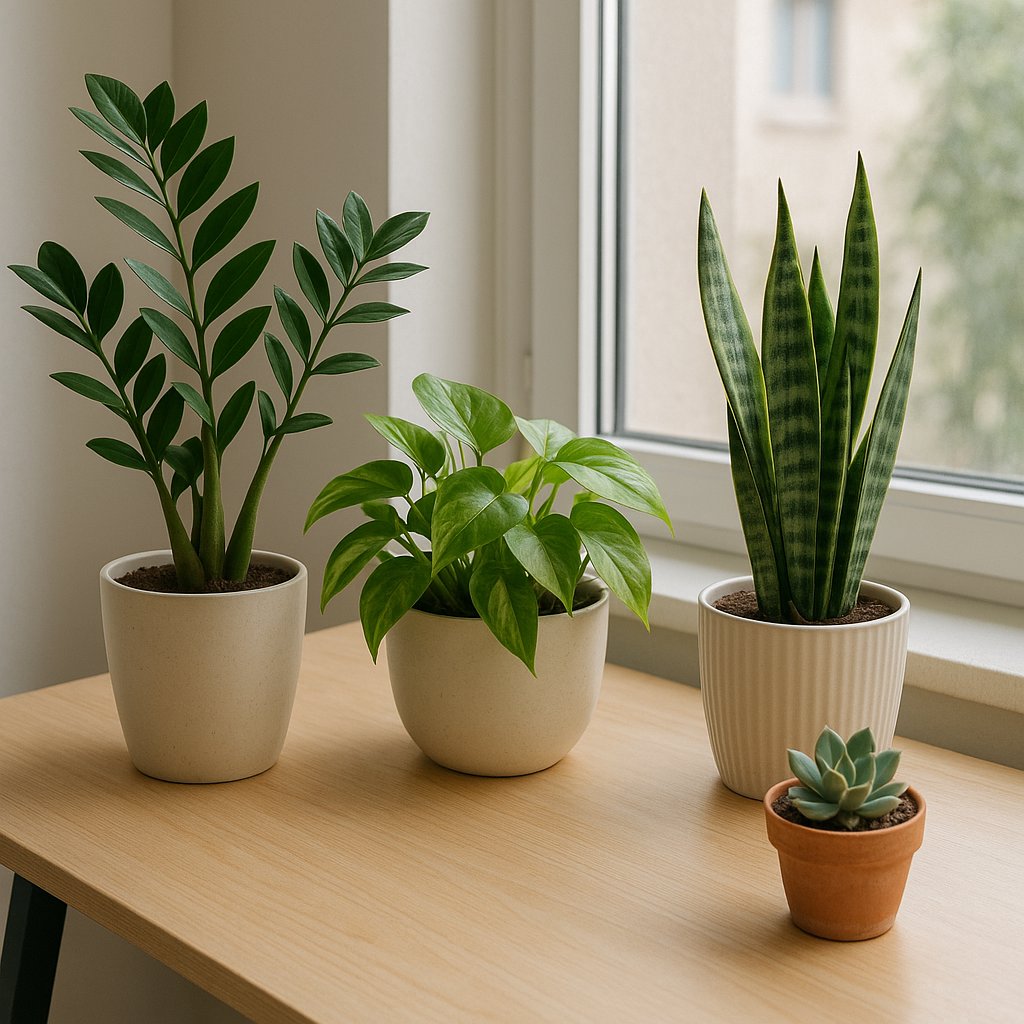
ZZ plant (Zamioculcas zamiifolia)
If I had to recommend one plant for a neglectful owner, this is it. It stores water in thick underground rhizomes, so watering every three to four weeks is plenty. It tolerates low light and has glossy leaves that look tidy without any pruning. Note that it’s mildly toxic if chewed, so keep it away from curious pets.
Snake plant (Dractaena trifasciata)
Upright, architectural, and nearly indestructible. It fits narrow desk corners well. The one real way to kill it is overwatering, so let the soil dry out fully between drinks. Every two to three weeks is usually right, and even less in winter.
Pothos (Epipremnum aureum)
Pothos is the forgiving trailing plant. It droops dramatically when thirsty and then bounces back within hours of watering, which is handy because it tells you when it needs a drink. It also grows happily in a jar of water, a good option for shared spaces where nobody wants to deal with soil.
Peace lily (Spathiphyllum)
This is the closest thing to a flowering plant that handles office life. It produces white blooms in medium light and also signals thirst by wilting. Overwatering and cold drafts are its main enemies. Like pothos, it’s toxic to pets if eaten.
Jade plant (Crassula ovata)
For a sunny windowsill desk, jade is a great pick. It’s a succulent, so watering every two to three weeks is enough. Given years, it develops a miniature tree shape that makes it a nice long-term companion.
Haworthia
This small, zebra-striped succulent is easier to keep alive than most cacti and is happy in medium light. It stays compact, which matters when your desk is already crowded.
Cast iron plant (Aspidistra elatior)
It earned its name honestly. It handles low light, temperature swings, and long gaps between waterings. Growth is slow, but that also means you rarely have to repot it.
What about flowers?
Blooming plants usually demand more attention, but a few are realistic for a desk.
- African violets: They bloom nearly year-round in bright, indirect light. Water from the bottom and avoid wetting the leaves.
- Phalaenopsis orchids: Better than their reputation suggests. Give them three ice cubes or a quarter cup of water once a week, and flowers can last two to three months.
- Kalanchoe: A succulent with clusters of small, long-lasting flowers in red, pink, or yellow. It’s very tolerant of dry office air.
- Christmas cactus: Blooms in late fall and winter if it gets slightly cooler nights and longer darkness. It’s a pleasant surprise for a December desk.
A small honesty note: after the flowers fade, many of these go back to being ordinary green plants. That’s fine. Think of the blooms as a seasonal bonus.
Small habits that keep plants alive
Low-maintenance doesn’t mean zero maintenance. A few habits go a long way:
- Check the soil, not the calendar. Push a finger two inches into the soil. If it’s dry, water. If not, wait.
- Use pots with drainage holes. A decorative cachepot is fine, but empty the saucer after watering. Soggy roots kill more desk plants than anything else.
- Plan for weekends and holidays. Succulents, ZZ plants, and snake plants will cope with a two-week absence. Water the pothos or peace lily the day you leave.
- Watch the vents. Heating and cooling vents blast plants with dry or cold air. Move them a few feet away.
- Wipe the leaves. Dust blocks light. A damp cloth once a month keeps leaves efficient and shiny.
A note for shared coworking spaces
In shared offices, the “everyone waters it” approach usually means it gets watered by five people or nobody. If you’re bringing a plant in, label it with a small tag listing its watering rhythm, such as “Water every other Monday.” Better still, pick something from the drought-tolerant group so it survives either extreme.
Pick one, start small
You don’t need a desk jungle. One resilient plant that matches your light is enough to soften a workspace, and there’s research from environmental psychology suggesting that even a bit of greenery can improve how people feel in their work environment. Start with a ZZ plant or pothos, learn how it responds over a month or two, and then expand if you enjoy it. If you want to go deeper, look into how different potting mixes and light levels affect growth. That knowledge will make every future plant easier to keep.