Walk into any big-box garden center in February and you’ll see the same trio crowding the checkout aisle: orchids with their arching stems, African violets in tidy plastic pots, and peace lilies with their glossy leaves and white, hooded blooms. They all promise color indoors, but they behave very differently once you get them home. I’ve killed my share of each, and the failures taught me more than the successes did. Here is how the three really compare.
Light: the first deal-breaker
Most flowering houseplant problems come down to light, so start there.
- Phalaenopsis orchids (the common “moth orchid”) want bright, indirect light. An east-facing window is ideal. A south window works if a sheer curtain softens the midday sun. Leaves that turn yellowish-red mean too much light, and dark green, floppy leaves mean too little.
- African violets (Streptocarpus sect. Saintpaulia) like similar conditions but are even fussier about direct sun, which scorches their fuzzy leaves. They also do very well under LED grow lights set 8–12 inches above the plant for about 12 hours a day.
- Peace lilies (Spathiphyllum) are the forgiving ones. They tolerate low to medium light and will survive in a north-facing room. They just bloom less there.
If your home is dim, the peace lily is the realistic choice. If you have a bright kitchen windowsill, you can try any of them.
Water: where most plants actually die
Overwatering kills more of these plants than neglect does, but each species gets into trouble in its own way.
Orchids: let the roots dry out
Moth orchids are epiphytes. In nature their roots cling to tree bark and dry quickly after rain. They’re usually sold in chunky bark, not soil. Water them about once a week, or every 7–10 days in winter, by soaking the pot for 10–15 minutes and draining it completely. Silvery-green roots are healthy. Brown, mushy roots are rotting. A clear plastic pot inside a decorative one lets you check the roots at a glance.
African violets: keep water off the leaves
Cold water on the leaves leaves ring-shaped spots, and water pooling in the crown invites rot. Water from the bottom, or pour carefully at the soil level with room-temperature water. Let the top half-inch of the mix dry slightly between waterings. A light, peaty mix with extra perlite is better than standard potting soil, which stays too heavy.
Peace lilies: dramatic but honest
A thirsty peace lily collapses completely, then perks up within hours of a drink. It’s a bit theatrical, but it’s a handy signal. Don’t make a habit of it, though, since repeated wilting browns the leaf tips. Water when the top inch of soil feels dry. Brown tips can also come from fluoride and salts in tap water, so letting water sit overnight or using filtered water can help.
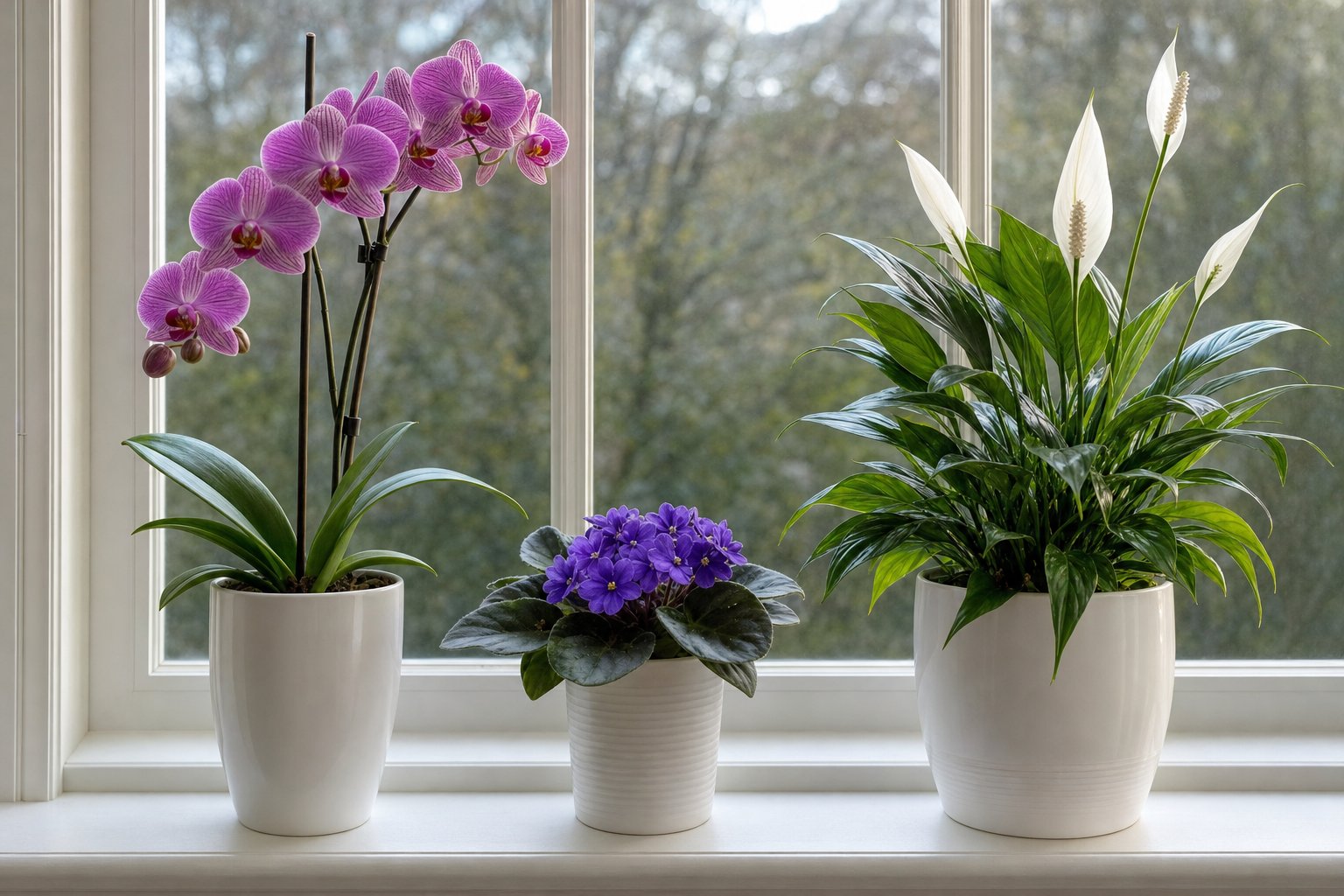
Side-by-side snapshot
| Feature | Orchid (Phalaenopsis) | African violet | Peace lily |
|---|---|---|---|
| Light | Bright, indirect | Bright, indirect or grow light | Low to medium |
| Watering | Weekly soak, dry between | Bottom water, keep leaves dry | When top inch is dry |
| Bloom time | 2–4 months, once or twice a year | Nearly year-round | Spring to summer, sometimes longer |
| Size | 12–30 inches with spike | 6–8 inches wide | 1–4 feet |
| Difficulty | Moderate | Moderate | Easy |
| Pet safety | Non-toxic to cats and dogs | Non-toxic | Toxic if chewed |
Will it bloom again?
This is the question that sends people back to the garden center in spring.
Orchids rebloom if they get a temperature drop. A difference of about 10°F between day and night for several weeks in fall nudges a new flower spike. After the blooms fade, cut the stem just above a node, the small bump under the spike, and you may get a side branch of flowers in two or three months. Feed with a diluted orchid fertilizer every other watering.
African violets are the most generous bloomers if conditions are steady. Use a fertilizer formulated for them, high in phosphorus, at quarter strength with each watering. Pinch off spent blooms and keep the plant slightly root-bound, since they flower best in small pots. A 4-inch pot suits a mature plant. Repot every year or so with fresh mix.
Peace lilies bloom when they’re mature and happy. A plant that produces only leaves usually needs more light, not more fertilizer. The white “flower” is actually a modified leaf (a spathe) wrapped around a spike of tiny true flowers. As the spathe fades to green, cut the stalk at the base.
Common mistakes I see again and again
- Putting the orchid’s pot in a decorative container without drainage, so water collects at the bottom.
- Misting African violets, which causes spotting and fungal issues.
- Moving a peace lily every few weeks. They sulk when relocated.
- Ignoring pets. Peace lilies contain calcium oxalate crystals that irritate mouths and stomachs of cats and dogs. If you have curious animals, violets and orchids are the safer picks.
- Using ice cubes to water orchids. It’s a popular trick, but cold shocks tropical roots, and a proper soak works better.
Which one should you pick?
Choose a peace lily if your light is limited, you travel a lot, or you want a plant that gives you clear signals. Choose an African violet if you have a small space, enjoy a bit of routine, and like constant color on a desk or shelf. Choose an orchid if you want dramatic, sculptural flowers and don’t mind learning how its roots work.
None of them is hard once you match the plant to the spot instead of the other way around. Start with one, watch it for a month, and note how the light moves through your room. That small bit of observation will do more for your plant than any fertilizer. If you get hooked, it’s worth reading deeper into each species’ needs, such as orchid root care or violet propagation from a single leaf, because that’s where this hobby gets really rewarding.