A small apartment, a narrow console table, or a desk shared with a laptop does not leave much room for a bouquet. Cut flowers that look modest in a shop can crowd a six-inch shelf once they open and spread. Choosing them for a tight space starts with the space itself, so it helps to gather a few numbers before you look at a single stem.
Measure the shelf before you shop
Grab a tape measure and write down three numbers: the width of the spot, its depth, and the height from the surface to whatever sits above it. That might be a higher shelf, a window frame, or a ceiling light. Put the numbers in your phone so you have them when you are standing in front of a flower display.
Next, leave breathing room. Flowers need a little air around the heads, and a bouquet pressed against a wall tends to lean and flatten on one side. A margin of a couple of inches on each side is a sensible starting point. If you want to test the fit, outline the vase footprint on the shelf with painter’s tape and look at it for a day.
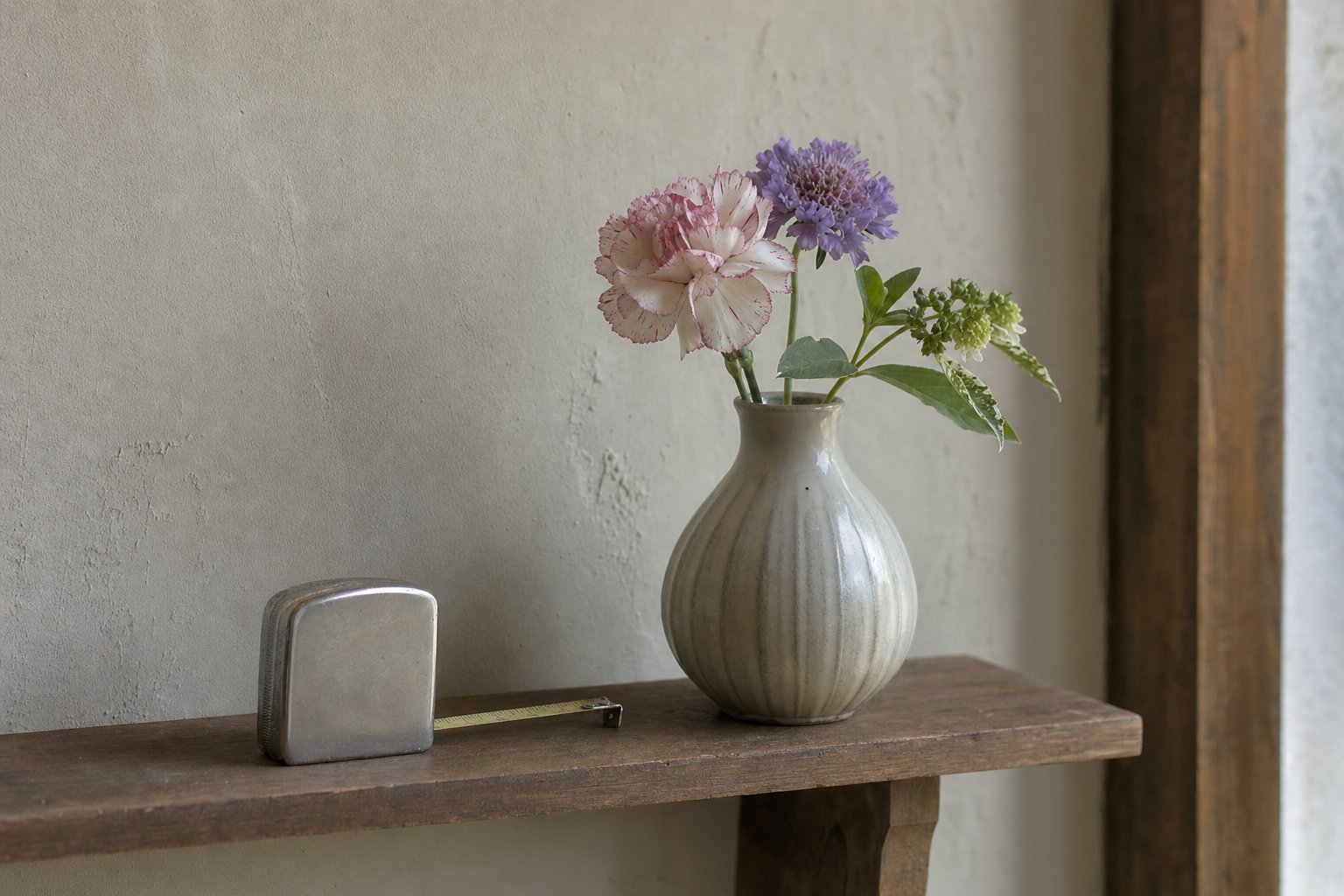
Height deserves its own check. Subtract the vase height from the clearance above the surface, and the remainder is the room your blooms have. Stems that touch a shelf above get bent or bruised.
Choose a vessel that stays put
On a small surface, the vase does more work than it seems to. A narrow bud vase holding a tall, top-heavy bunch can tip with one bump of an elbow. A vessel with a wide base and some weight, such as thick ceramic or heavy glass, sits more steadily. A short, wide shape also uses less vertical space, which matters on a crowded shelf.
A few small habits add stability. Push the vase back from the edge, especially if pets or children move through the room. A thin non-slip pad underneath helps on glossy wood. Rinse the vessel with soap and water before filling it, and trim the stems at an angle so they take up water freely.
Match the cut flowers to the vase
Proportion is easier to judge once you know the vase. Many arrangers use a rule of thumb that the finished bouquet should stand about one and a half times the height of the vase. On a shelf with limited clearance, you can go lower than that. Trim a little at a time and check the fit in the vase before cutting more.
Stem count matters as much as height. A small group of larger blooms usually reads as tidy, while a dense mix of many varieties can look busy in a small area. A single variety in one color tends to take up less visual space. Compact flower heads, such as spray roses or small daisies, keep the outline narrow.
When you want to compare shapes and sizes against your notes, a catalog page like this one for Atlanta flower bouquets lets you look at several styles side by side. Check each listing’s own description, and hold the dimensions you measured next to what you see.
Keep the vase away from appliances
Placement matters after the measuring is done. Warm spots are hard on cut flowers, and small homes have plenty of them. The top of a refrigerator, the area beside a toaster or coffee maker, a radiator, a television, and a lamp with a hot bulb can all dry out petals and shorten how long the bouquet looks fresh.
Try the hand test. If the spot feels warm on your palm after a few minutes, pick another one. Vents and drafty windows are worth avoiding for similar reasons. Direct afternoon sun through glass can also be too much.
Water and electricity should stay apart. Keep the vase clear of power strips, chargers, and outlets, and avoid putting it where a spill would reach a cord. In a kitchen, a spot a few feet from the sink usually avoids both splashes and stove heat.
A short routine for the first day
- Tape the vase footprint on the chosen spot and confirm the height clearance.
- Fill the clean vase with cool water and trim each stem at an angle.
- Remove any leaves that would sit below the waterline.
- Set the vase back from the edge and away from heat sources.
Change the water every day or two and recut the stems slightly each time. Before your next purchase, write the width, depth, and height clearance of your spot on a note, and bring it along when you compare bouquets.